• More than just buns: Eating out in Georgian London

    The All Saints Church, Dahlem and Zoom-Meeting Hüttenweg 46, Berlin

    Georgians of all classes dined out in pubs, coaching inns, French ordinaries and confectioners. They also ate all kinds of street food and had an almost insatiable appetite for buns. On a journey through London we will discover the early morning drinks consumed on the street before dawn, ‘nunchions’ served at coaching inns, Billingsgate dinners, confectioners’ cakes, syllabubs and ices, the proverbially thin ham dished up to diners at Vauxhall Pleasure Gardens, as well as the Jewish takeaway foods of the East End and even London’s first ‘Indian’ restaurant.
  • Cities of the Hanseatic League

    The All Saints Church, Dahlem and Zoom-Meeting Hüttenweg 46, Berlin

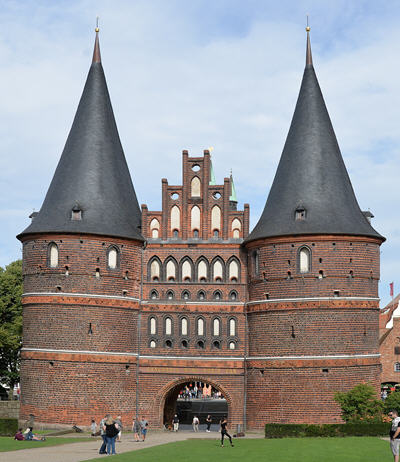
    Beginning in Lübeck and Hamburg in the 13th century, the Hanseatic League eventually linked some 60 European cities in a series of trade agreements that transcended national bounds. Riga, Tallinn, Stockholm, Bruges, London, King’s Lynn, Nuremberg, Bremen, Danzig, Stettin and Konigsberg were all connected by an intricate series of contracts, defended by armed forces and a powerful navy, and vital to the economic prosperity of each city. The Brick Gothic style of architecture developed during this period, and many important churches, town halls, guildhalls, warehouses and offices were built in this style, many of which survive to this day.

  • Betty Joel: Glamour and Innovation in 1930s design

    The All Saints Church, Dahlem and Zoom-Meeting Hüttenweg 46, Berlin

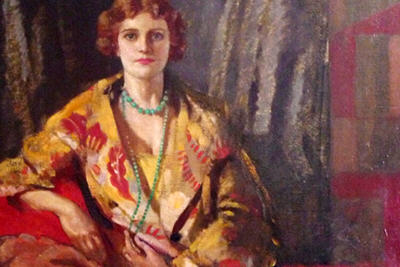
    Betty Joel, born Mary Stewart Lockhart, ran a furniture making and design business. At its peak, in the 1920s and 30s, Betty Joel Ltd employed 50 craftsmen and had showrooms in Knightsbridge. With no formal training, she created, through a flair for branding and marketing, the leading furnishing company of the day in London. The talk explores her early life and marriage to David Joel, exhibitions, and projects. Her clients included royalty, high society, politicians, banks, hotels (such as the Savoy in London) as well as film companies and theatres.

  • Secrets of Affluent Mayfair

    The All Saints Church, Dahlem and Zoom-Meeting Hüttenweg 46, Berlin

    Just north of Piccadilly, in the city of Westminster, is the historic district of Mayfair, now one of the most affluent neighbourhoods in the world. In this armchair tour, we’ll discover the humble early roots of this area and later its aristocratic appeal. We’ll visit famous gardens such as Berkeley Square and Grosvenor Square, see posh shops, private members’ clubs, beautiful buildings including stately Georgian townhouses, plenty of public art and many hidden corners. As we duck in and out of alleyways and mews, we’ll discover some of the secrets behind the silk curtains and gilded shutters of Mayfair.

  • The Land of the Midnight Sun: Norway’s Golden Age of Painting

    The All Saints Church, Dahlem and Zoom-Meeting Hüttenweg 46, Berlin

    Why isn’t Norwegian art better known? Should it be? The late 19th century marked a defining moment in Norway. For the first time romantic painters began to turn to their own land for inspiration. They painted the stormy seas, the towering glaciers and the raw, untamed nature of their homeland. Their aim? To draw attention to the beauty of their country and explore what it meant to be ‘Norwegian’. This talk looks at the artists from Norway’s ‘Golden Age’ who captured the far north with drama and romance and interpreted their wild country as a mythical, eerie entity. It will explore the stunning works of JC Dahl, Peder Balke, Nikolai Astrup and Harald Sohlberg. This is the chance to discover some of art’s most underappreciated artists!

  • 300 years of Blenheim Palace’s History – and the continuing Battle for Blenheim

    The All Saints Church, Dahlem and Zoom-Meeting Hüttenweg 46, Berlin

    An overview of Blenheim Palace’s rich and chequered history which looks at why the Palace took so long to build - and why it was never completed; the Dukes and Duchesses that made positive contributions to the Estate as well as those who did exactly the opposite - and, of course a look at the Palace's greatest son - Winston Churchill.

  • A Dickens of a Christmas and God Bless us Everyone

    The All Saints Church, Dahlem and Zoom-Meeting Hüttenweg 46, Berlin

    Charles Dickens has often been proclaimed as “The Man Who Invented Christmas” and indeed on hearing that Dickens had died, a cockney barrow-girl said: “Dickens dead? Then will Father Christmas die too?” Dickens revived the Christmas traditions with his warm portrayal of Christmas in the domestic setting; with plum pudding, piping hot turkey, games, dancing and family cheer by the hearth. Although he celebrated Christmas in numerous works it is his enduring master piece, ‘A Christmas Carol’ published on 19th December 1843 which immortalises the spirit of Christmas Cheer.

  • The life and work of May Morris, “a remarkable woman“ [Zoom only !!]

    Zoom Lecture only (!)

    Towards the end of her life May Morris (1862-1938) - designer, craftsperson, and younger daughter of William Morris – wrote, ‘I’m a remarkable woman, always was, though none of you seem to think so’. Overshadowed in her lifetime by the achievements of her illustrious father, thankfully today May Morris is recognised as a leading figure in the Arts & Crafts Movement. Excelling in the field of embroidery, she was Head of Embroidery at Morris & Co. by the time she was twenty-three.

  • 19th Century Travellers in Scotland

    Konferenzraum im Alliierten-Museum, Berlin and Zoom-Lecture Clayallee 135, Berlin, Berlin

    This lecture focuses on the travels of artists, musicians and writers in Scotland during the period when the romance of the Highlands, fostered by the tales of Ossian, made Scotland a destination for those such as Turner, Chopin, Mendelssohn, Dorothy and William Wordsworth and Coleridge. The talk is illustrated by the music of Chopin and Mendelssohn. The routes of the travellers and the highlights (including Fingal’s Cave, the Falls of Clyde, the Trossachs, etc.) are shown by means of slides of paintings and drawings (including Mendelssohn’s little known sketches), as well as present-day views of the same scenes.

  • The Glories of Ancient Rome

    Konferenzraum im Alliierten-Museum, Berlin and Zoom-Lecture Clayallee 135, Berlin, Berlin

    Rome, as we all know, was not built in a day. It took centuries to construct the eternal city, and Rome’s glorious monuments and those who created them are the focus of this talk. It is sometimes hard to see beyond the ruins of today, so using masterpieces of Roman art and reconstructions and with the Emperors as our guides, we’ll go on a journey through Rome in its golden prime: from the splendid civic hubs of the great Imperial Forums to the beautiful, soaring temples of the gods, the dazzling gleam of marble and mosaic in the great public baths and the roar of the crowds at the Circus Maximus and the Colosseum.

  • London, New York, St Ives: The Avant Garde in Cornwall 1939 to 1964

    Konferenzraum im Alliierten-Museum, Berlin and Zoom-Lecture Clayallee 135, Berlin, Berlin

    The arrival of Ben Nicholson, Barbara Hepworth and Naum Gabo in St Ives at the beginning of the Second World War marked a significant moment, both for them and for the artists already living and working in the small Cornish town. These three artists were key players in British modernism and soon challenged the status quo of the existing artists’ colony, established at the end of the 19th century. They inspired and, in Hepworth’s case employed, a younger generation of artists before they too were challenged by new ideas. This lecture will chart the rise of St Ives as a centre for modern art after the war and show that it was not only Nicholson, Hepworth and Gabo who achieved international success but other artists such as Peter Lanyon, Roger Hilton, Terry Frost and Wilhelmina Barns-Graham. This success led to the town becoming a focal point for post-war avant-garde art which led the eyes of the modern art world to focus, for a brief period, on St Ives.

  • Alfred Hitchcock’s London: Shaping a City for Suspense

    Konferenzraum im Alliierten-Museum, Berlin and Zoom-Lecture Clayallee 135, Berlin, Berlin

    In this lecture we will learn how the great film director Alfred Hitchcock used London, and how it influenced his life and his art. Still both instantly recognisable and widely acclaimed over 40 years after his death, Hitchcock’s greatest and bestremembered movies are usually selected from his Hollywood days. However, he spent almost exactly half his life in London and Essex, and the influences of these formative years on his later work were enormous. From his inventive use of London locations in the 1920s and ‘30s in classics such as The Lodger and The 39 Steps, to his inspired deployment on film of the West End’s theatre stars, Hitchcock never forgot the city. And as it helped shape his life and imagination, so he shaped it on the cinema screen.