• Britain versus the Bauhaus: Modern Design in the 1930s

    The All Saints Church, Dahlem and Zoom-Meeting Hüttenweg 46, Berlin

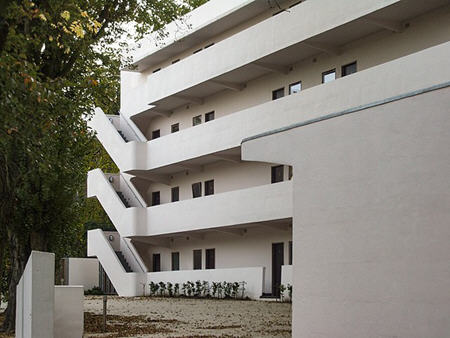
    Staatliches Bauhaus was an art school founded under Weimar Republic by the architect Walter Gropius. From 1919 to 1933 its tutors combined crafts and the fine arts in a radical new approach to design education.
    Less well known is the influence of the Bauhaus and other German design schools on design and art education in Britain in this period. As the impact of the economic ‘Slump’ of c.1929-34 hit British manufacturing sales, many in local and national government took the view that Britain’s struggling industrial base could be improved if moves were made to provide for better design education. This lecture looks at some of the work of the key artists involved in improving British design in this period – including Paul Nash, Eric Ravilious, Vanessa Bell, Duncan Grant and Roger Fry; and at Unit One – formed by Paul Nash in 1933 to promote modern art, architecture and design.
  • Cardiff Castle: A Welsh Victorian Camelot

    The All Saints Church, Dahlem and Zoom-Meeting Hüttenweg 46, Berlin

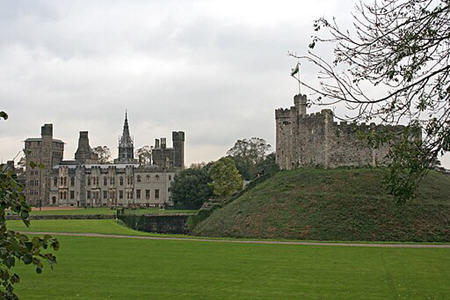
    Far from being a ruin, Cardiff Castle is one of the most remarkable houses in Britain. Dating from the time of the Romans, centuries of change culminated in the complete transformation undertaken in the 1870s by the Marquess of Bute and his eccentric genius architect William Burges. They created a ‘Feudal extravaganza’ in fifteen highly imaginative interiors, including an Arab room, a Pompeian roof garden and rooms with an astrological theme. The lecture examines this wonderful building and the personalities of those involved.

  • The Jurassic World of Mary Anning (Courtesy of TAS Hamburg, Zoom only)

    Zoom Lecture only (!)

    “The Jurassic World of Mary Anning: the pioneering woman paleontologist of the 19th century and her contemporaries"

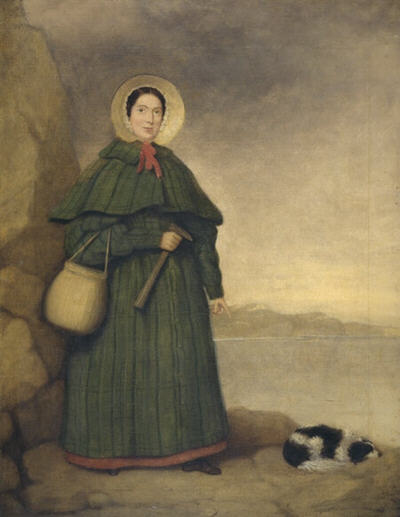
    Aaron Hunter, scientist and reserarcher, will give an introduction to 19th century palaeontologist Mary Anning and we will discover how she searched the Jurassic rocks of England's south coast to unearth what were believed to be sea dragons and which we now call marine reptiles. The lecture will look at the social history and influences of Mary Anning and the 19th century scientists that she would have worked with. We will not only look at these spectacular fossil remains, but also see how palaeontologists have revealed how these ancient extinct animals lived.

  • Stone on Stone: The Men Who Built the Cathedrals

    Zoom Lecture only (!)

    Standing in the nave of Ely cathedral when she was 14, Imogen stopped listening to the guide saying how long and how high and started wondering how on earth ordinary human beings created sky-scraping, dizzyingly high buildings on which even the top-most parts were delicately decorated. How, why and for whom were her questions. For God, for personal redemption and to make a living are the answers to the last two of those, but the "how" was harder to fathom. In this lecture we meet the Master Masons who both designed the buildings and ran the site. They commanded everything whether it was sourcing the vast quantities of wood and stone, recruiting the workforce or knowing enough about their various trades to be able to create heaven on earth out the cacophony of thousands of chisels and hammers. These men were charismatic leaders, but they were continually checked by their fellow Master Masons in the interests of making a building as strong as possible - we only see their successes, after all.

  • After Miss Jekyll: English Gardens of the late 20th and early 21st Centuries (Courtesy of TAS Hamburg, Zoom only)

    Zoom Lecture only (!)

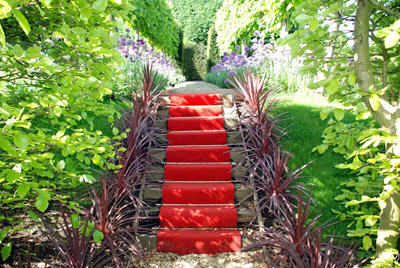
    The long shadow of the Arts and Crafts Movement has hung over English gardening for most of the twentieth century. The dominance of Miss Jekyll and the continuing popularity of gardens at Hidcote and Sissinghurst have proved to be an enduring legacy.
    There were, however, always subversive undercurrents of alternative styles and influences which have gained ever greater importance and momentum. Post-Modernism, rich in symbolism, has, in gardens like Portrack, Little Sparta and Througham Court, explored the worlds of literature and science; while plants, for centuries an abiding passion of English gardeners, have continued to cast their spell, with new discoveries enriching gardens across the country.

  • More than just buns: Eating out in Georgian London

    The All Saints Church, Dahlem and Zoom-Meeting Hüttenweg 46, Berlin

    Georgians of all classes dined out in pubs, coaching inns, French ordinaries and confectioners. They also ate all kinds of street food and had an almost insatiable appetite for buns. On a journey through London we will discover the early morning drinks consumed on the street before dawn, ‘nunchions’ served at coaching inns, Billingsgate dinners, confectioners’ cakes, syllabubs and ices, the proverbially thin ham dished up to diners at Vauxhall Pleasure Gardens, as well as the Jewish takeaway foods of the East End and even London’s first ‘Indian’ restaurant.

  • Cities of the Hanseatic League

    The All Saints Church, Dahlem and Zoom-Meeting Hüttenweg 46, Berlin

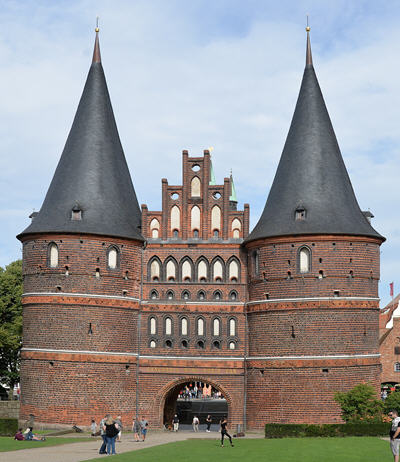
    Beginning in Lübeck and Hamburg in the 13th century, the Hanseatic League eventually linked some 60 European cities in a series of trade agreements that transcended national bounds. Riga, Tallinn, Stockholm, Bruges, London, King’s Lynn, Nuremberg, Bremen, Danzig, Stettin and Konigsberg were all connected by an intricate series of contracts, defended by armed forces and a powerful navy, and vital to the economic prosperity of each city. The Brick Gothic style of architecture developed during this period, and many important churches, town halls, guildhalls, warehouses and offices were built in this style, many of which survive to this day.

  • Betty Joel: Glamour and Innovation in 1930s design

    The All Saints Church, Dahlem and Zoom-Meeting Hüttenweg 46, Berlin

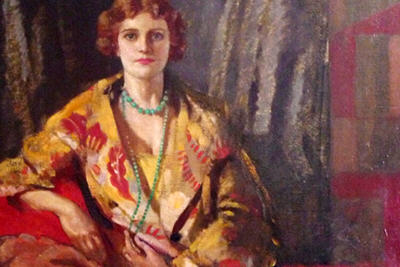
    Betty Joel, born Mary Stewart Lockhart, ran a furniture making and design business. At its peak, in the 1920s and 30s, Betty Joel Ltd employed 50 craftsmen and had showrooms in Knightsbridge. With no formal training, she created, through a flair for branding and marketing, the leading furnishing company of the day in London. The talk explores her early life and marriage to David Joel, exhibitions, and projects. Her clients included royalty, high society, politicians, banks, hotels (such as the Savoy in London) as well as film companies and theatres.

  • Secrets of Affluent Mayfair

    The All Saints Church, Dahlem and Zoom-Meeting Hüttenweg 46, Berlin

    Just north of Piccadilly, in the city of Westminster, is the historic district of Mayfair, now one of the most affluent neighbourhoods in the world. In this armchair tour, we’ll discover the humble early roots of this area and later its aristocratic appeal. We’ll visit famous gardens such as Berkeley Square and Grosvenor Square, see posh shops, private members’ clubs, beautiful buildings including stately Georgian townhouses, plenty of public art and many hidden corners. As we duck in and out of alleyways and mews, we’ll discover some of the secrets behind the silk curtains and gilded shutters of Mayfair.

  • The Land of the Midnight Sun: Norway’s Golden Age of Painting

    The All Saints Church, Dahlem and Zoom-Meeting Hüttenweg 46, Berlin

    Why isn’t Norwegian art better known? Should it be? The late 19th century marked a defining moment in Norway. For the first time romantic painters began to turn to their own land for inspiration. They painted the stormy seas, the towering glaciers and the raw, untamed nature of their homeland. Their aim? To draw attention to the beauty of their country and explore what it meant to be ‘Norwegian’. This talk looks at the artists from Norway’s ‘Golden Age’ who captured the far north with drama and romance and interpreted their wild country as a mythical, eerie entity. It will explore the stunning works of JC Dahl, Peder Balke, Nikolai Astrup and Harald Sohlberg. This is the chance to discover some of art’s most underappreciated artists!

  • 300 years of Blenheim Palace’s History – and the continuing Battle for Blenheim

    The All Saints Church, Dahlem and Zoom-Meeting Hüttenweg 46, Berlin

    An overview of Blenheim Palace’s rich and chequered history which looks at why the Palace took so long to build - and why it was never completed; the Dukes and Duchesses that made positive contributions to the Estate as well as those who did exactly the opposite - and, of course a look at the Palace's greatest son - Winston Churchill.

  • A Dickens of a Christmas and God Bless us Everyone

    The All Saints Church, Dahlem and Zoom-Meeting Hüttenweg 46, Berlin

    Charles Dickens has often been proclaimed as “The Man Who Invented Christmas” and indeed on hearing that Dickens had died, a cockney barrow-girl said: “Dickens dead? Then will Father Christmas die too?” Dickens revived the Christmas traditions with his warm portrayal of Christmas in the domestic setting; with plum pudding, piping hot turkey, games, dancing and family cheer by the hearth. Although he celebrated Christmas in numerous works it is his enduring master piece, ‘A Christmas Carol’ published on 19th December 1843 which immortalises the spirit of Christmas Cheer.